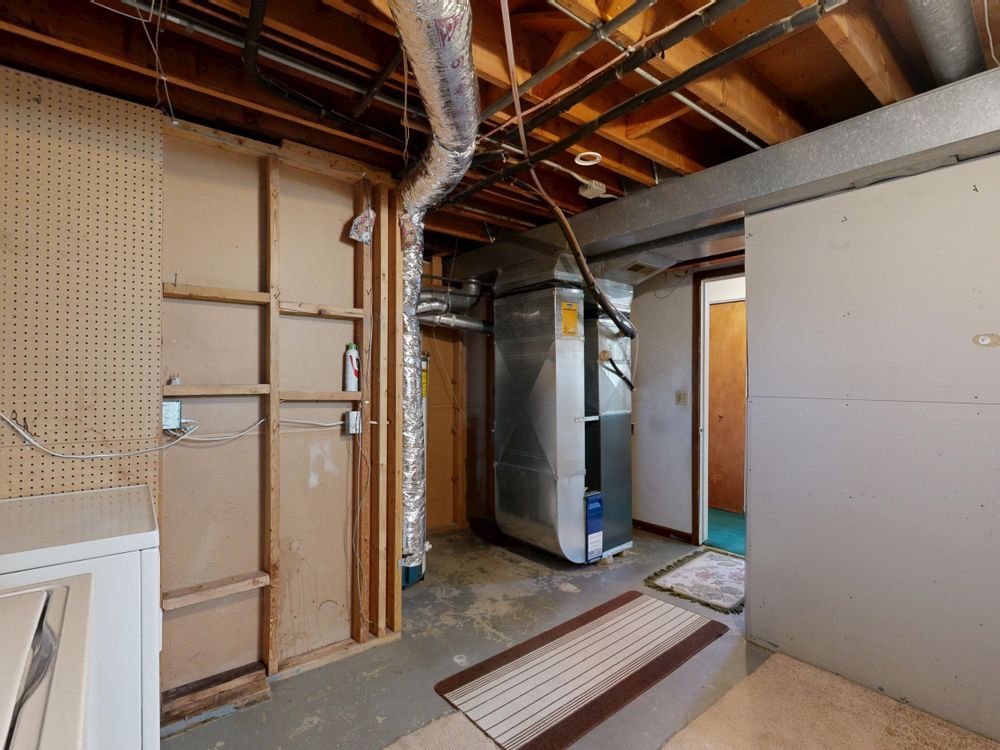
The dew-point physics behind sweating crawl space ducts
During an Indianapolis summer, your AC pushes 55°F air through sheet-metal supply trunks hanging below the floor. Meanwhile, NOAA normals put Indianapolis’s average July dew point at 64.7°F (and frequently 68°F–73°F during sticky afternoons). Whenever 65°F+ dew-point outdoor air enters open foundation vents and touches a 55°F duct or cold copper pipe, water condenses on the surface immediately — just like a cold glass of iced tea outdoors.
Damage caused by dripping ductwork
- Saturated duct wrap: Fiberglass duct insulation fills with water, sags off the metal, rusts boot connections, and grows mildew.
- Wet subfloor above supply runs: Warm moist air trapped around cold supply registers can dampen subfloor plywood and cup hardwood flooring above.
- Higher cooling bills: Wet insulation loses R-value and leaky crawl-space duct seams draw humid, dusty crawl air straight into your return plenum.
How to stop ductwork condensation permanently
- Seal duct seams with mastic: Keeps cold air inside the trunks and stops return leaks from sucking crawl space air.
- Close off outside vents & cover dirt soil: Blocking humid outdoor air and clay soil vapor via encapsulation keeps crawl air below the dew point.
- Run a crawl-rated dehumidifier: Holding relative humidity around 45%–55% drops the crawl space dew point well below duct surface temperatures (dehumidifier sizing guide).
- Replace soaked duct insulation: Only after the space is dry so new wrap does not trap water.